
Digital Smile Design in Antalya: What to Expect Before Treatment
How Digital Smile Design works for planning veneers or a Hollywood Smile in Antalya: the steps, the evidence, and what it cannot promise.
What you need to know
How Digital Smile Design works for planning veneers or a Hollywood Smile in Antalya: the steps, the evidence, and what it cannot promise.
How Digital Smile Design works for planning veneers or a Hollywood Smile in Antalya: the steps, the evidence, and what it cannot promise.
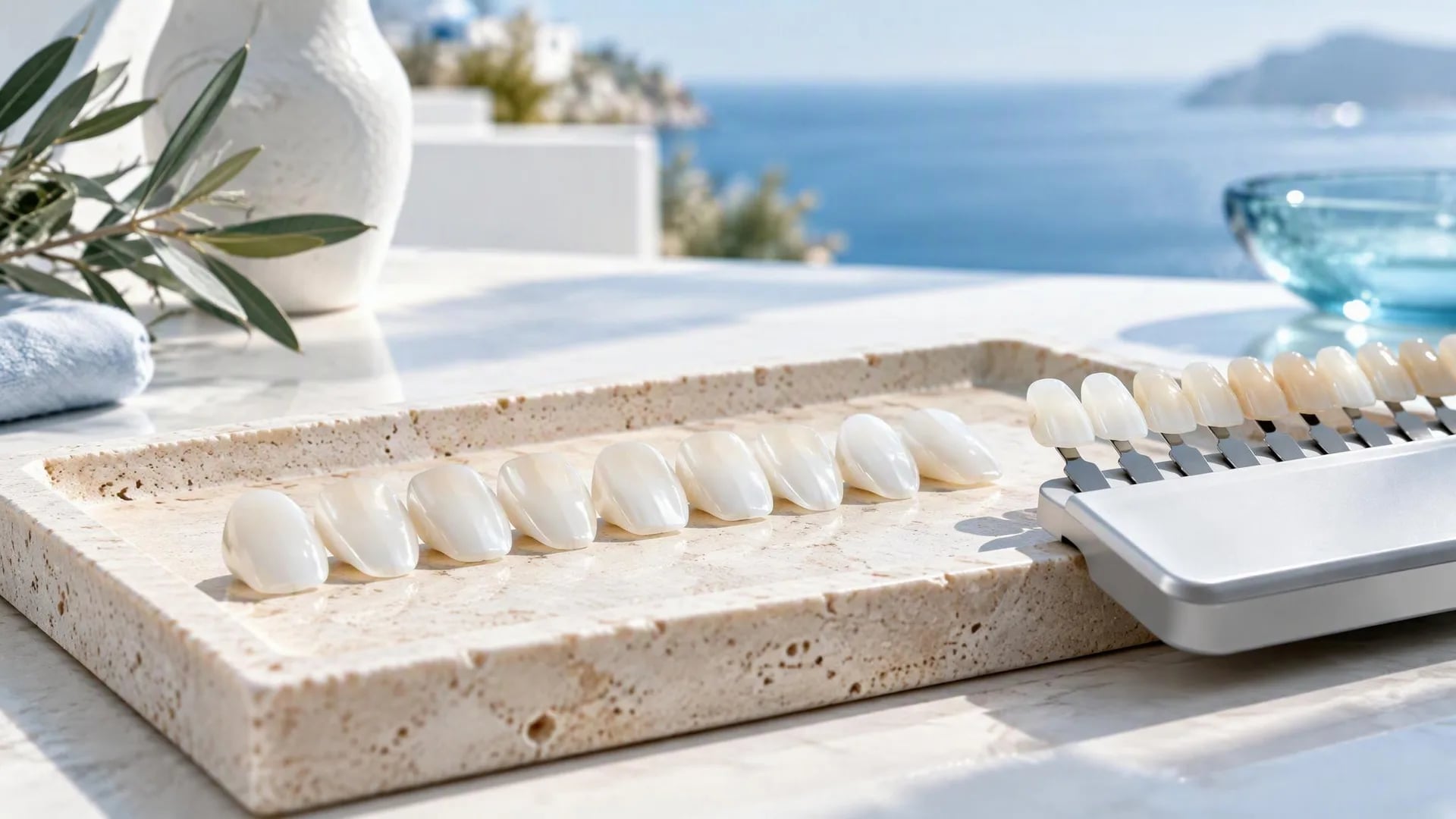
Digital Smile Design (DSD) is a photo- and video-based planning method that lets you preview a proposed smile change, such as veneers, crowns or a fuller smile makeover, before any tooth is touched. In an Antalya treatment plan it usually starts with photos and a short video you send ahead of travel, continues with a digital simulation reviewed on a call, and finishes with a physical trial smile you can see and feel in the clinic before the final design is approved and any irreversible step begins.
What Digital Smile Design actually is
DSD is not a single piece of software but a planning concept that combines facial photography, video and dental measurements so a dentist can analyse how your teeth, gums, lips and face work together, then simulate changes digitally rather than describing them in words. A peer-reviewed overview of the method in aesthetic dentistry describes it as a tool that evolved from hand-drawn sketches on printed photographs to fully digital drawing software, and that functions as "a multi-use conceptual tool that can support diagnostic vision, improve communication, and enhance treatment predictability", allowing analysis of facial and dental details that a clinical look alone can miss.
A separate review of how DSD is integrated into restorative dentistry explains that the concept focuses on a smile that is harmonious with the whole face, not just the visible teeth, by weighing facial shape, lip line and gum contour alongside tooth proportions before any design is proposed. The same review notes that this structured visual process is associated with better dentist-patient communication and more realistic expectations going into treatment — see the full discussion of DSD principles and patient communication.
How a DSD-led plan usually runs before and during a trip to Antalya
The exact sequence varies by clinic, but a DSD-based pathway for international patients typically follows the same components described in the dental literature:
- Remote photo and video review. You send facial and dental photos, and sometimes a short video of your smile and bite, before you travel. This is used to form an initial, provisional idea of options, not a final diagnosis.
- Digital imaging and analysis. The planning team captures or works from "high-quality digital images, typically including facial photographs, intraoral scans, and radiographs", which form the foundation for the proposed design.
- Digital smile simulation. Software is used to simulate possible changes to tooth shape, length and proportion against your own facial features, so you can see and comment on a design before committing to anything.
- Clinical examination and a physical trial smile. Once you are in Antalya, the treating dentist examines your mouth directly, takes any additional imaging needed, and — for many veneer, crown or smile-design cases — creates a physical mock-up or wax-up "to provide the patient with a tangible representation of the proposed changes" that you can try in your own mouth before any tooth is prepared.
- Feedback, adjustment and sign-off. You give feedback on shape, length and look; the design is adjusted; only once you and the dentist agree does any irreversible step, such as tooth preparation or bonding, begin.
A written treatment plan following a free x-ray review sits alongside this process — the DSD simulation shows you the intended aesthetic result, while the written plan sets out the clinical steps, visits and aftercare involved for options such as smile design.
Who tends to benefit — and what Digital Smile Design cannot do
DSD is most useful for people weighing cosmetic options such as veneers, crowns or a broader smile makeover, where shape, length and shade involve genuine choices and it helps to see them before deciding. It is also useful where several teeth, or the gum line, need to be planned together rather than one at a time.
It has real limits, and being honest about them matters more than the simulation itself:
- It depends entirely on the quality of your photos and video. The same aesthetic-dentistry review warns that "inadequacy in [photographic and video documentation] may distort the reference image and may result in an incorrect diagnosis and planning" — so a remote preview is provisional until a clinician examines you in person.
- It is a communication and planning aid, not a diagnosis. It cannot replace a clinical examination, up-to-date x-rays, or a check for active decay, gum disease or bite problems that must be addressed first.
- A simulation is not a promise of the final result. Tooth and gum biology, the health of the teeth underneath, and your own feedback during the trial-smile stage can all change the final outcome from the first digital draft.
- It needs the right equipment and trained staff — intraoral scanners, specific software and CAD/CAM tools — which is one reason not every clinic offers the same depth of digital planning.
None of this means DSD is not useful; it means it is one part of a proper work-up, alongside an in-person exam, imaging and a written plan — never a substitute for them.
What to check before you book DSD-planned treatment in Antalya
Because the simulation is only as reliable as what sits behind it, it is worth asking direct questions before you travel.
Digital Smile Design-assisted planning vs. a plan with no digital preview:
| Question | DSD-assisted pathway | No digital preview |
|---|---|---|
| Can you see the proposed shape before treatment? | Yes — digital simulation, often followed by a physical trial smile | Usually not until the final restoration is fitted |
| What does accuracy depend on? | Photo/video quality, scans, and the clinician's examination | Verbal description and the dentist's experience alone |
| Where does feedback happen? | On the simulation and again on the physical mock-up, before any tooth is touched | Mostly after the restoration is already made |
| Does it replace an in-person exam? | No — confirmation and any adjustment still require a clinical visit | Not applicable |
Alongside that comparison, it is reasonable to ask:
- Who is the registered dentist who will actually examine and treat you, and can you verify their qualifications before you travel? The UK's General Dental Council guidance on going abroad for dental treatment recommends checking a provider's registration and asking about their training, experience and how complications are handled, since UK regulation and complaint routes may not extend to a clinic overseas.
- Will the digital design be confirmed with a physical trial smile in the clinic, so you can try the look before any irreversible step, as described for veneer and Hollywood Smile planning?
- Who owns your photos and video, and could they be reused in marketing? Clinical guidance on patient photography is clear that separate consent is needed both for taking images and for any use of them beyond your own records, which the GDC's own FAQ on protecting patient information confirms directly: "you would need the patient's consent both to the taking of the photographs and to their use in promoting your practice."
- How many visits does the full plan need, and does the digital stage change that number?
FAQ
Is a Digital Smile Design simulation the same as a guarantee of my final result?
No. It is a planning and communication tool that shows an intended direction, not a guaranteed outcome. The final result depends on your own tooth and gum health, the clinical examination, and adjustments made during the physical trial-smile stage.
What photos or video will I need to send before my consultation?
Clinics typically ask for close-up and resting facial photographs, a few smiling photos from different angles, and sometimes a short video of you speaking and smiling. Clear, well-lit images matter because the plan is built from them.
Can Digital Smile Design be used to plan a Hollywood Smile or veneers in Antalya?
Yes — DSD is commonly used for exactly these cases, where tooth shape, length and shade involve real choices. It is typically combined with a physical mock-up once you are examined in the clinic, before any tooth is prepared.
Does the digital design replace the need for x-rays or an in-person exam?
No. Imaging and a hands-on examination are still required to assess the health of your teeth, gums and bite, and to confirm the plan is clinically appropriate, not only aesthetically.
Who owns the photos I send, and can a clinic use them for marketing?
Your images belong to you. Separate, explicit consent should be asked for before any photo or video is used beyond your own clinical record, including for marketing — this is standard practice guidance in the UK and a reasonable question to ask any provider.
Planning your own Antalya smile consultation
If you are considering veneers, crowns or a wider smile design plan, a sensible first step is a free consultation built around a photo and x-ray review, followed by a written treatment plan rather than a quote based on a single photo alone. You can start that conversation, ask about the digital planning stage, and get your questions answered directly on WhatsApp at +90 536 500 0744, or by requesting a free consultation and treatment plan online.
Sources:
- Jafri Z, et al. "Digital Smile Design — An innovative tool in aesthetic dentistry." Journal of Oral Biology and Craniofacial Research (PMC/NIH).
- "Integrating digital smile design into restorative dentistry." (PMC/NIH).
- General Dental Council — Going abroad for dental treatment.
- General Dental Council Standards — Maintain and protect patients' information: FAQ.
Planning veneers or a Hollywood Smile?
Share a few smile photos and a recent x-ray. A dentist reviews them and explains realistic options for your smile, free.
Reply within 24 hours on WhatsApp
Related articles
9 min readIllustrative
Gummy Smile Treatment in Antalya: Causes, Options and What to Expect
Why more gum shows when you smile, how dentists find the real cause, and the realistic treatment options available in Antalya.
9 min readIllustrative
Zirconium Crowns in Antalya: What to Expect
What zirconia (zirconium) crowns are, how treatment in Antalya works step by step, who is a candidate, and what evidence says about durability.