
Dental Treatment in Turkey from Kuwait: Flights, Visa and Trip Planning for Gulf Patients
A practical guide for patients travelling from Kuwait to Antalya: visa rules by passport, flights, trip length, aftercare and insurance gaps.

What you need to know
A practical guide for patients travelling from Kuwait to Antalya: visa rules by passport, flights, trip length, aftercare and insurance gaps.
A practical guide for patients travelling from Kuwait to Antalya: visa rules by passport, flights, trip length, aftercare and insurance gaps.
Patients travelling from Kuwait to Antalya for dental treatment generally need to check their own passport's visa rules (not Kuwait's), book around a staged treatment plan rather than a single trip, and confirm a clinic's official authorisation before committing. Flights between Kuwait City and Antalya run non-stop with at least one carrier, which makes short, well-planned visits realistic. The rest of this guide walks through visas, flights, trip length, aftercare arrangements and the questions worth asking before you fly.
What you need to know before you book
Kuwait has one of the largest English-speaking expatriate populations in the Gulf, and many residents — Kuwaiti nationals and long-term expats alike — look at Antalya for dental implants, crowns, veneers or a full smile makeover. The planning questions are broadly the same as for other Gulf patients, but two details are specific to Kuwait: the visa rule that applies to you depends on your own nationality, not your country of residence, and Kuwait's Ministry of Health runs a separate "treatment abroad" referral scheme that is not the same thing as booking private dental care yourself.
- Your passport, not your Kuwaiti residency, decides whether you need a Turkish visa.
- Most dental plans that go beyond a single filling or whitening session need two trips, not one.
- A written treatment plan after a free X-ray review should come before you book any flight.
- Health Talia does not publish prices online; every case gets an individual quote once a dentist has reviewed your scans.
Visa and entry requirements for patients travelling from Kuwait
If you hold a Kuwaiti ordinary passport, Türkiye's Embassy in Kuwait has confirmed that Kuwaiti citizens can obtain a multiple-entry e-Visa, valid for three months, free of charge, through the official e-Visa portal — a route set out directly in the embassy's own visa announcement for Kuwaiti passport holders (Turkish Embassy, Kuwait). The same notice reminds applicants that their passport should remain valid for at least 60 days beyond the planned stay.
If you live in Kuwait but travel on a different passport — British, American, Canadian, Australian, Irish, Indian, Filipino and other nationalities make up a large share of Kuwait's expatriate community — your entry rule follows your own nationality, not your Kuwaiti residence visa. Türkiye's Ministry of Foreign Affairs maintains a country-by-country list covering exactly this on its Visa Information for Foreigners page, and it advises contacting the nearest Turkish mission if anything is unclear. Because rules and reciprocal arrangements change, check your specific passport on that page, or with the Turkish Embassy, before you book flights — don't rely on general "Gulf resident" guidance written for a different nationality.
Getting from Kuwait to Antalya: realistic flight options
Kuwait City (KWI) has a non-stop route to Antalya (AYT) with Jazeera Airways (see the airline's own Kuwait–Antalya route page), typically taking a little over three hours. Frequency is limited rather than daily, and it can vary with the season, so check the current schedule directly with the airline rather than an old itinerary. If a non-stop flight doesn't fit your dates, a connection through Istanbul with a carrier such as Turkish Airlines is the usual alternative, adding a layover but widening the choice of days and times.
Either way, build in some slack. Clinics in Antalya that work with international patients typically offer airport transfers as part of a package, but a short delay or missed connection is easier to absorb if your consultation isn't scheduled for the same afternoon you land.
How many trips and how long should you plan to stay?
How many visits you need, and how long each one lasts, depends entirely on the treatment plan your dentist proposes after examining your scans — no agency or website can give you a reliable figure in advance. As a general pattern, straightforward restorative work (a single crown, a filling, whitening) can often be completed in one visit, while implants, All-on-4/All-on-6 and full smile makeovers are typically staged, because bone and gum tissue need time to heal between steps.
| Stage | What usually happens | Typical timing |
|---|---|---|
| Trip 1 | Consultation, scans/X-rays, first treatment stage (e.g. implant placement, tooth preparation) | Several days to around a week |
| Healing interval | Bone/gum healing at home in Kuwait; remote check-ins with the clinic | Weeks to a few months, treatment-dependent |
| Trip 2 | Final restoration (crowns, implant-supported bridge), fit check, review | Several days |
Ask your dentist to set this out in writing as part of your treatment plan, so you can request the right number of days off work and the right flight dates before you commit to either trip.
What to arrange with a dentist in Kuwait before you fly
The UK's General Dental Council advises anyone considering treatment abroad to speak to their current dentist first, since that dentist already knows your dental and medical history (GDC: going abroad for dental treatment). The same principle applies whether your home dentist is in Kuwait, your home country, or wherever you were last treated. Before you travel, it's worth:
- Asking your current dentist for a copy of your records and any recent X-rays, so the Antalya clinic isn't starting from nothing.
- Telling your dentist what treatment you're planning abroad, and asking whether they're willing to do routine check-ups or minor follow-up once you're home.
- Listing any medical conditions, medications or allergies clearly in writing, not just verbally, for the clinic abroad.
- Agreeing, in advance, who you would contact in Kuwait if something felt wrong in the weeks after you return — a private dental clinic, your regular dentist, or urgent care.
The Oral Health Foundation's patient safety guidance on dental tourism makes a similar point: plan for aftercare before you leave, not after a problem appears (Oral Health Foundation: dental tourism). This isn't about assuming something will go wrong — it's about not having to solve it from scratch, in a hurry, if it does.
Checking the clinic's authorisation and understanding insurance gaps
Türkiye's Ministry of Health keeps a public register of facilities and facilitators holding International Health Tourism Authorisation, which is the official way to confirm a clinic or agency is recognised to treat international patients (Ministry of Health: authorised healthcare providers and facilitators). It's reasonable to ask any clinic or agency for their registration details and to cross-check them yourself rather than taking a website's word for it.
It's worth being clear about one thing that sometimes causes confusion: Kuwait's Ministry of Health also runs a government "treatment abroad" referral service, but that scheme exists for government-funded referrals when a specific treatment genuinely isn't available in Kuwait, and it goes through a medical committee (Kuwait e.Gov: Ministry of Health treatment-abroad service). That is a different process from choosing, and paying for, elective private dental care abroad yourself — most dental tourism to Antalya falls into the second category, not the first.
On insurance, standard travel insurance policies typically exclude planned medical and dental treatment, and often exclude complications arising from it as well (Allianz Travel Insurance: does travel insurance cover dental emergencies?). If you want cover for a dental complication while abroad, read the policy wording carefully or ask the insurer directly — don't assume a general travel policy covers it.
FAQ
Do Kuwaiti citizens need a visa for Turkey?
Kuwaiti ordinary-passport holders can get a free, three-month multiple-entry e-Visa through the official e-Visa portal, according to Türkiye's Embassy in Kuwait. Apply through evisa.gov.tr and check your passport's remaining validity before you book.
I live in Kuwait but I'm not a Kuwaiti citizen — do the same rules apply to me?
No. Your visa requirement for Turkey depends on your own passport's nationality, not your Kuwaiti residence status. Check your specific nationality on Türkiye's Ministry of Foreign Affairs Visa Information for Foreigners page, or ask the nearest Turkish mission.
Is there a direct flight from Kuwait to Antalya?
Yes, Jazeera Airways operates a non-stop Kuwait–Antalya route. Frequency is limited and can change by season, so check the current timetable on the airline's own site before you commit to dates. A connection through Istanbul is the usual backup option.
How many trips will my treatment need?
It depends on the treatment. Simple restorative work can often be done in one visit; implants and full-arch treatments are typically staged over two trips with a healing interval in between. Your dentist confirms the exact plan after reviewing your scans.
Will my travel insurance cover a dental complication after I get home?
Possibly not automatically. Standard travel insurance commonly excludes planned medical or dental treatment and complications linked to it, so check the policy wording or ask your insurer directly before you travel.
How do I check that a clinic or agency is officially authorised?
Ask for their International Health Tourism Authorisation details and cross-check them against Türkiye's Ministry of Health register of authorised providers and facilitators, rather than relying only on a clinic's own marketing claims.
Sources
- Turkish Embassy, Kuwait — visa procedures for Kuwaiti passport holders
- Republic of Türkiye, Ministry of Foreign Affairs — Visa Information for Foreigners
- Republic of Türkiye, Ministry of Health — authorised healthcare providers and facilitators
- General Dental Council — going abroad for dental treatment
- Oral Health Foundation — dental tourism patient safety guidance
- Kuwait e.Gov — Ministry of Health treatment-abroad service
- Allianz Travel Insurance — does travel insurance cover dental emergencies?
- Jazeera Airways — Kuwait to Antalya route
None of this replaces an individual assessment. If you're considering dental implants, crowns, veneers or a smile makeover and you're based in Kuwait, Health Talia can review your X-rays and dental history and put together a written treatment plan — with realistic trip timing — before you book anything. Start with a free treatment plan request, read more about the dental implant process and our dental treatment abroad checklist, or message us directly on WhatsApp at +90 536 500 0744 to ask questions first.
Planning dental treatment in Turkey?
Send your x-ray or photos and receive a written treatment plan from a dentist at a licensed clinic in Antalya, free and with no obligation.
Reply within 24 hours on WhatsApp
Related articles

8 min readIllustrative
How to Arrange a Dental Consultation in Antalya Before You Travel
How UK and international patients can safely arrange a remote dental consultation in Antalya before booking flights, per GDC and FCDO guidance.
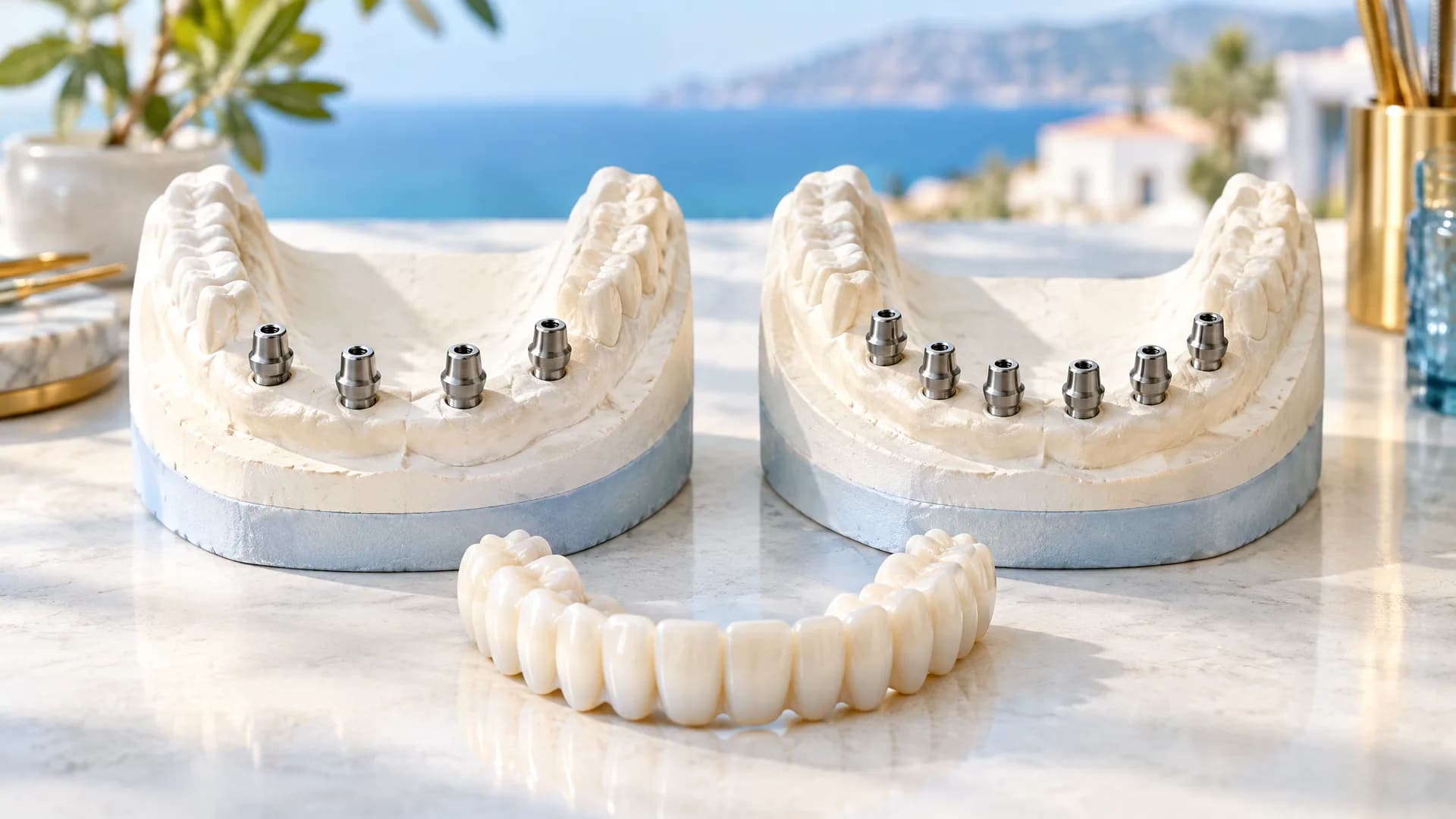
8 min readIllustrative
All-on-4 in Turkey: What Actually Determines Your Treatment Plan and Quote
All-on-4 quotes in Turkey vary by implant count, material, loading protocol and aftercare, not a fixed price list. Here is what shapes your plan.