
Zirconium Crowns in Antalya: What to Expect
What zirconia (zirconium) crowns are, how treatment in Antalya works step by step, who is a candidate, and what evidence says about durability.
What you need to know
What zirconia (zirconium) crowns are, how treatment in Antalya works step by step, who is a candidate, and what evidence says about durability.
What zirconia (zirconium) crowns are, how treatment in Antalya works step by step, who is a candidate, and what evidence says about durability.
Zirconium crowns — more precisely zirconia crowns, since the ceramic used is zirconium dioxide rather than the metal itself — are a widely used option for rebuilding a tooth that is heavily filled, cracked, discoloured or structurally weakened. Treatment in Antalya follows the same clinical sequence used anywhere: a diagnostic consultation and x-rays, tooth preparation, a digital scan or impression, a temporary crown, laboratory fabrication, and a fitting visit where the bite is checked. This guide explains what the material is, how the process runs, who tends to be a suitable candidate, and what the evidence says about how long these crowns last.
What a "zirconium crown" actually is
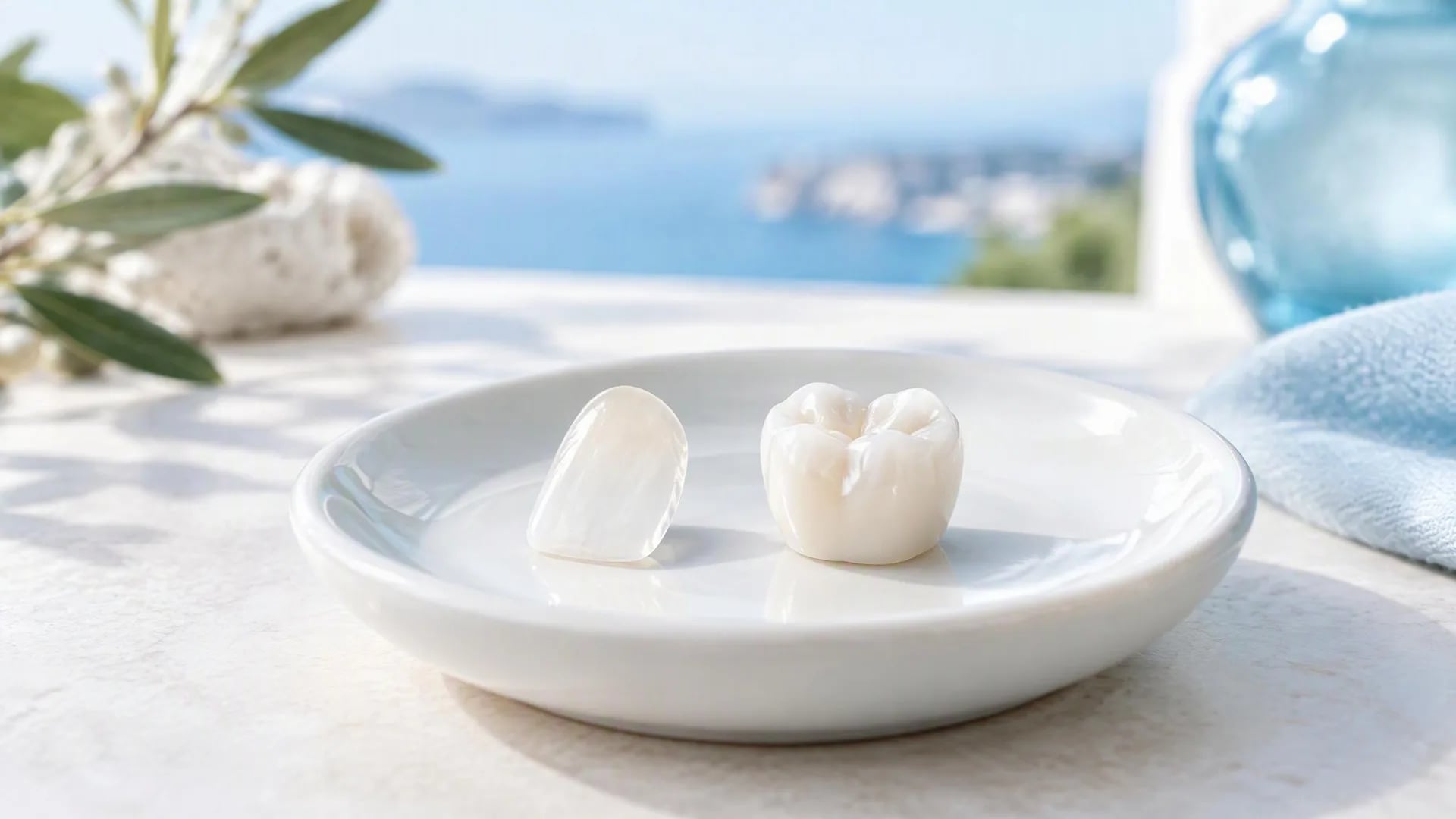
In everyday conversation, "zirconium crown" and "zirconia crown" are used interchangeably, but the material itself is zirconium dioxide (zirconia), a crystalline ceramic — not the metallic element zirconium. This matters clinically because zirconia is a biocompatible, metal-free ceramic, which is one reason it has become popular for both back teeth, where strength matters most, and front teeth, where appearance matters most.
Not all zirconia crowns look or perform the same way. High-strength "monolithic" zirconia is milled as a single, dense block and is typically more opaque, often chosen for molars that carry heavy biting forces. More translucent, layered or multilayer zirconia mimics natural enamel more closely and is often preferred for visible front teeth. A dentist should explain which type is proposed for which tooth, rather than treating "zirconia" as one interchangeable product.
You can read more about the material and where it is typically used on our zirconium crowns treatment page.
Zirconia compared with other common crown materials
The NHS describes a dental crown as a cap that completely covers a real tooth, used for teeth that are broken, decayed, heavily filled or otherwise weakened, made from a range of materials including metal, porcelain, or a combination of the two. Zirconia, lithium disilicate (often sold as E.max) and porcelain-fused-to-metal (PFM) are three options a dentist may discuss, each with different trade-offs.
| Question | Zirconia | Lithium disilicate (E.max) | Porcelain-fused-to-metal (PFM) |
|---|---|---|---|
| Strength | Very high; a common choice for molars and bridges | High, though generally lower than zirconia | High, from the metal substructure |
| Appearance | Ranges from opaque (monolithic) to tooth-like (layered/multilayer) | Naturally translucent; often favoured for single front teeth | Porcelain layer can look good, but a dark metal margin can sometimes show at the gumline |
| Typical use | Molars, bridges, patients with heavier bite forces | Front teeth, premolars, veneers | Still used in some cases, less common where all-ceramic options are available |
| Tooth preparation | Can sometimes be slightly more conservative than PFM | Often requires a specific minimum thickness for strength | Usually more tooth reduction to accommodate the metal and porcelain layers |
| Known concerns | Opposing tooth wear if over-polished; layered zirconia can chip | More prone to fracture than zirconia under heavy load | Possible metal allergy in rare cases; visible grey line over time |
For a deeper, tooth-by-tooth comparison of zirconia against E.max, see our dedicated guide on E.max crowns vs zirconia crowns.
What happens during treatment: the clinical steps
Whichever clinic a patient chooses, the broad sequence for a zirconia crown is similar:
- Consultation and x-ray review. Health Talia coordinates a free consultation and x-ray review before travel, so the proposed plan reflects your own teeth rather than a generic package. A written quote follows; the treating clinic confirms the final diagnosis in person.
- Clinical examination. On arrival, the dentist examines the tooth and the surrounding gum and bone, then confirms or adjusts the plan.
- Tooth preparation. The tooth is reshaped to make room for the crown while preserving as much healthy structure as the diagnosis allows.
- Digital scan or impression. This captures the prepared tooth and bite so the crown can be designed accurately.
- Temporary crown. This protects the prepared tooth while the permanent one is made.
- Laboratory fabrication. The permanent crown is designed digitally and milled from a zirconia block, then finished or layered depending on the type chosen.
- Fit and bite check. At the final visit, the dentist checks fit, contact with neighbouring teeth, colour match and bite before cementing the crown.
How this sequence fits into a trip to Antalya — how many visits are needed and how long to plan to stay — depends on how many teeth are involved and whether any preparatory treatment is needed first. Our guide on how long to stay in Turkey for dental treatment walks through the typical timelines in more detail.
Who tends to be a good candidate — and who may need other treatment first
A zirconia crown is generally considered when a tooth has lost enough structure, through decay, a large existing filling, a crack or heavy wear, that a filling alone would not restore it predictably. Good candidacy generally depends on:
- Enough remaining tooth structure, or an appropriate core build-up, to support the crown.
- Healthy or well-managed gums around the tooth, since active gum disease should usually be addressed first.
- An assessment of grinding or clenching (bruxism), which can increase the risk of chipping in layered crowns and may call for a protective night guard.
- The condition of the tooth's nerve. If the tooth is already compromised or at risk of pulp involvement, root canal treatment may be recommended before or as part of the crown plan.
On root canal treatment, the NHS notes that the procedure removes infected or inflamed pulp from inside a tooth, and that treatment may not proceed, or the tooth may not be worth saving, if too little healthy structure remains afterwards or the surrounding gum and bone cannot support it. A crown is never considered in isolation from the health of the tooth underneath it — which is why a proper examination and x-rays, not a photograph, decide candidacy.
How long do zirconia crowns typically last? What the evidence shows
No dental restoration lasts forever, and no reputable clinic should promise a guaranteed lifespan. That said, there is a reasonable body of peer-reviewed evidence on zirconia crown survival. A systematic review published in the Journal of Prosthetic Dentistry compared survival and complication rates of zirconia-ceramic and metal-ceramic single crowns across multiple studies and found zirconia-based crowns performed comparably to, and in some analyses better than, traditional metal-ceramic crowns. A separate systematic review of zirconia-based fixed dental prostheses followed for up to ten years reported favourable long-term survival; the most common complications were mechanical — chiefly chipping of a veneering porcelain layer, rather than failure of the zirconia core itself.
The practical takeaway is that the zirconia core is strong and well-studied, but a layered porcelain veneer added for aesthetics is the more common point of mechanical failure — one reason some dentists prefer fully monolithic zirconia for molars and reserve layered designs for front teeth under closer bite management.
Aftercare and maintaining your crown
A zirconia crown is cared for much like a natural tooth. General NHS guidance on dental treatments and the American Dental Association's patient education both emphasise routine brushing and interdental cleaning around the crown margin, and attending regular check-ups so a dentist can monitor the fit, bite and surrounding gum over time.
- Brush twice daily and clean between teeth daily, paying attention to the crown margin.
- Avoid using crowned teeth to bite very hard items such as ice, hard sweets or non-food objects.
- If you grind or clench your teeth, ask about a night guard to protect the crown and the opposing teeth.
- Keep up routine dental check-ups after you return home, so any change in fit or sensation is reviewed promptly.
Planning the trip: what to verify before you book
Because you will be making treatment decisions from a distance, it is worth being deliberate about what you check first. In the UK, you can confirm whether a dentist is registered to practise using the General Dental Council's online register — useful for a second opinion from a UK-based dentist, though it only covers UK-registered professionals, not clinics in Turkey. For a clinic abroad, ask instead for the treating dentist's qualifications, how many zirconia crown cases they place in a typical month, which laboratory manufactures the crowns, and what happens if an adjustment is needed after you return home.
Also ask: how many appointments your plan needs, whether a temporary crown is included if you travel in two stages, and what documentation (shade, material brand, x-rays) you will receive to share with a dentist back home. A written treatment plan after a free x-ray review should answer most of this before you commit to travel dates.
FAQ
Is "zirconium crown" the same as "zirconia crown"?
Yes, in everyday use. The material is zirconium dioxide (zirconia), a ceramic, not the metal zirconium itself. Both terms refer to the same type of crown.
How many visits does a zirconia crown usually need?
Typically two clinical stages — preparation with a scan or impression, then fitting the finished crown — with a temporary worn in between. Exact appointments and days depend on your case; ask for a written plan before you travel.
Do zirconia crowns always need a root canal first?
No. Root canal treatment is only recommended when the tooth's nerve is infected, inflamed or at significant risk. Many teeth are crowned without ever needing it; a dentist decides based on examination and x-rays.
Can a zirconia crown chip or break?
The dense zirconia core is strong, but a layered porcelain veneer added for appearance can chip, particularly in patients who grind their teeth. Bite assessment and, where needed, a night guard are part of a responsible plan.
Will the crown look like a natural tooth?
Modern translucent and multilayer zirconia can closely resemble enamel, especially for front teeth, but the right type and shade depend on your case and how colour matching is handled.
Is a zirconia crown cheaper in Turkey than in the UK?
Health Talia does not quote prices on this site and makes no savings claims. What we offer is a free x-ray review and a written treatment plan, so you can compare your options with full information — often at a lower cost than UK private care.
If you are considering a zirconium (zirconia) crown and want an honest, evidence-based opinion on your specific tooth, Health Talia can arrange a free consultation and x-ray review, with a written treatment plan to follow. Message us on WhatsApp at +90 536 500 0744 to send photos and start the conversation, or request a free treatment plan online.
Sources
- NHS — Dental treatments
- NHS — Root canal treatment
- American Dental Association (MouthHealthy) — Crowns
- PubMed — Systematic review of survival and complication rates of zirconia-ceramic and metal-ceramic single crowns
- PubMed — Survival rates and complications for zirconia-based fixed dental prostheses over up to 10 years
- General Dental Council — The dental registers
Wondering whether you need crowns?
Send photos or an x-ray and a dentist explains whether crowns, fillings or another option fits your teeth, in a free written plan.
Reply within 24 hours on WhatsApp
Related articles
8 min readIllustrative
Implant-Retained Dentures in Antalya: What to Expect
How implant-retained dentures (overdentures) work in Antalya: candidacy, attachment types, the treatment timeline and aftercare essentials.

9 min readIllustrative
Root Canal Treatment in Antalya: What to Expect as a UK Patient
What root canal treatment in Antalya involves, how many appointments to expect, and how to check a clinic's standards before you travel.