
Zirconia Crowns vs PFM Crowns: What the Evidence Shows
Zirconia or porcelain-fused-to-metal? Compare strength, appearance, allergy risk and lifespan using NHS, ADA and peer-reviewed evidence.
What you need to know
Zirconia or porcelain-fused-to-metal? Compare strength, appearance, allergy risk and lifespan using NHS, ADA and peer-reviewed evidence.
Zirconia or porcelain-fused-to-metal? Compare strength, appearance, allergy risk and lifespan using NHS, ADA and peer-reviewed evidence.
Zirconia and porcelain-fused-to-metal (PFM) crowns are the two materials most dentists compare when a tooth needs a full-coverage restoration. In short: zirconia is generally the stronger, metal-free, more aesthetic option for most teeth today, while PFM remains a reasonable choice in specific situations, such as very long bridges or where a dentist needs a proven, lower-cost metal substructure. Neither is automatically "better" for every patient — the right choice depends on which tooth is being restored, your bite, any metal allergies, and what your dentist sees on examination.
What Zirconia and PFM Crowns Are Actually Made Of
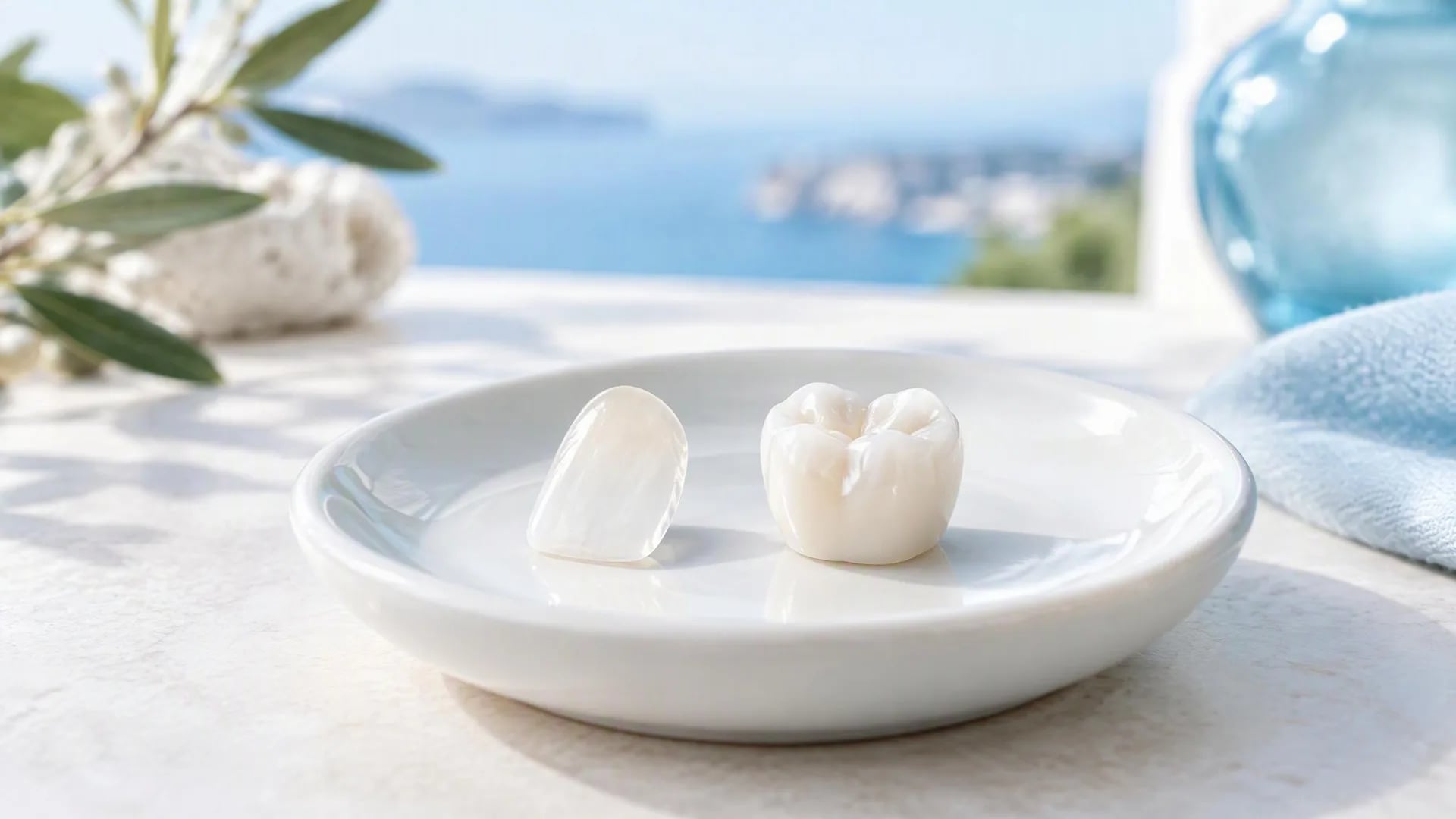
A porcelain-fused-to-metal crown has a metal substructure, usually an alloy of base metals, gold or palladium, with layers of porcelain baked over the top to mimic a natural tooth. A zirconia crown is milled from a solid block of zirconium dioxide, a dental ceramic, either left as a strong "monolithic" block or layered with an extra porcelain veneer for a more translucent look near the biting edge.
The NHS confirms that crowns can be made from all metal, porcelain fused to metal, all ceramic (which includes zirconia) or all resin, and that your dentist chooses the material they consider clinically necessary for that particular tooth, not a single "best" option across the board. The American Dental Association's patient guidance similarly explains that crowns are used to strengthen a weakened tooth, protect one with a large filling, restore a broken tooth, or cap a dental implant — the material is chosen to fit that job.
Strength and Chipping: What the Research Actually Shows
Zirconia's core is harder and more fracture-resistant than cast metal or porcelain alone, which is why it has become popular for back teeth and bridges that take heavy biting force. But "stronger core" does not automatically mean "fewer problems overall". A systematic review of fixed dental prostheses on zirconia- and metal-supported restorations, published via PubMed, found that both material types had high survival rates, but chipping of the porcelain veneer layered on top was reported more often on zirconia frameworks than on metal ones. In other words, the zirconia core rarely breaks, but the cosmetic porcelain layered over it can still chip in some cases, just as it can on a PFM crown.
More recent practice-based evidence is reassuring for both materials. A 2023 critically appraised topic from McGill University's Faculty of Dentistry reviewed a five-year randomised trial and a five-year prospective cohort study and found no statistically significant or clinically meaningful difference in survival between zirconia and PFM crowns over that period. The honest summary: good evidence puts zirconia and PFM close to each other on durability over five years, with the main practical difference being where and how chipping shows up, not whether the crown survives at all.
Zirconia vs PFM at a Glance
| Factor | Zirconia | PFM |
|---|---|---|
| Core material | Solid zirconium dioxide ceramic, no metal | Metal alloy base with porcelain layered over it |
| Strength for back teeth / bridges | Very high; well suited to heavy biting force | Strong, long-established, still used for long-span bridges |
| Appearance | Can be made highly translucent; no grey metal line | Natural colour on the visible surface, but a metal line can show at the gum edge, especially if gums recede |
| Metal allergy risk | None — metal-free | Possible in patients sensitive to nickel, cobalt or palladium alloys |
| Where it fits best | Front and back teeth, implant crowns, most general cases | Long bridges, very limited vertical space, cases needing a proven metal substructure |
| Known trade-off | Porcelain veneer layer can chip if too thin or poorly supported | Metal line can become visible over time as gums change |
Appearance: Which One Looks More Natural
For front teeth, most patients today lean towards zirconia because a well-made zirconia crown has no metal substructure to create a grey or dark line at the gum margin. This becomes more noticeable over years, as gums can recede slightly with age, exposing more of the crown's edge. PFM can still look very natural when first fitted, particularly with a skilled ceramist, but the visible metal collar is a long-term cosmetic consideration your dentist should discuss with you if the crown is on a front tooth.
For back teeth that are rarely visible when you smile, appearance matters less than strength and fit, which is one reason some dentists still choose PFM or full-metal crowns for molars, especially where there is very little space between the opposing teeth.
Metal Allergies and Biocompatibility
Zirconia contains no metal, so it removes allergy risk entirely for that part of the restoration. This matters for the small number of patients who are sensitive to the alloys used in PFM crowns. A systematic review in Quintessence International on allergic reactions associated with metal alloys in PFM fixed prosthodontic devices found that true allergic reactions are uncommon and not well documented overall, but that nickel, cobalt and palladium-containing alloys are the ones most often implicated when reactions do occur. If you already know you have a nickel or cobalt allergy — for example from earrings or watch straps causing skin reactions — tell your dentist before any crown work, since this is exactly the situation where a metal-free zirconia or all-ceramic crown is usually the more cautious choice.
Lifespan and Aftercare, Realistically
Well-made crowns of either material can last many years with good care, though no dentist can promise an exact number for your mouth. General NHS patient guidance on crowns notes that a well-maintained crown typically lasts around 8 to 10 years, depending on check-ups, brushing and flossing technique, and diet; some crowns last considerably longer with careful care and regular dental visits, and some fail earlier if there is ongoing grinding, poor gum health or decay at the margin. Night grinding (bruxism) is worth mentioning specifically, since it affects both materials — if your dentist identifies grinding during your assessment, a night guard is often recommended alongside crown work to protect the restoration.
Whichever material you choose, the basics of aftercare are the same: brush twice daily, clean between teeth, keep up with dental check-ups, and avoid using your crowned teeth to bite extremely hard objects (ice, pen caps, opening packaging).
Where Each Material Still Makes the Most Sense
- Zirconia usually fits: front teeth where a metal-free, translucent look matters; implant-supported crowns; patients with a known or suspected metal allergy; most general single-tooth restorations.
- PFM may still fit: very long-span bridges where a metal framework offers proven rigidity; cases with minimal vertical space for a thicker ceramic layer; situations where a dentist specifically recommends it based on your bite and tooth position.
This is exactly the kind of decision that benefits from a dentist physically examining your teeth, bite and gum health, or reviewing clear x-rays and photographs remotely, rather than choosing a material based on general articles alone. If you are comparing crown options for Antalya treatment, our zirconium crowns page covers the procedure itself in more detail, and our guide to veneers vs crowns and E.max vs zirconia comparison may help if you are weighing crowns against other restoration types.
FAQ
Are zirconium crowns better than porcelain-fused-to-metal crowns?
Not universally. The evidence shows broadly similar survival over five years, with zirconia generally stronger at its core and free of metal allergy risk, while PFM remains a reasonable, well-tested option for specific cases such as long bridges. "Better" depends on the tooth being treated, your bite, and whether you have a metal sensitivity — your dentist's examination should guide the final decision, not a general comparison.
Do zirconia crowns look as natural as porcelain?
Modern layered zirconia can look very natural, especially for front teeth, and avoids the dark gum-line shadow that can eventually show with PFM. Fully monolithic zirconia (used mainly for back teeth) is slightly less translucent but very strong; a skilled lab technician adjusts the layering and shade to match your other teeth either way.
How long do zirconia and PFM crowns typically last?
Both materials commonly last around 8 to 10 years or longer with good oral hygiene, regular dental check-ups and a diet that avoids very hard biting. Chipping of the outer porcelain layer, when it happens, is the most common reason a crown needs attention sooner than that on either material.
Can I get a zirconia crown if I have a metal allergy?
Zirconia contains no metal, so it is often the more cautious choice for patients with a known or suspected nickel, cobalt or palladium sensitivity. Tell your dentist about any metal allergies — including reactions to jewellery — before treatment planning begins, so they can confirm the right material for you.
Which crown material does Health Talia use for patients travelling to Antalya?
Our partner clinic in Antalya assesses each patient's teeth, bite and any allergy history before recommending a material, rather than defaulting to one option for everyone. A free consultation and x-ray review is how this is confirmed, and you receive a written treatment plan before travelling, with no obligation to proceed.
If you are trying to decide between zirconia and PFM crowns for your own treatment, the most useful next step is a free, no-obligation consultation: send your x-rays or recent dental photos over WhatsApp on +90 536 500 0744, or complete our treatment plan request, and our team in Antalya will review your case and set out the options in writing before you travel.
Sources
- NHS — What are NHS fillings and crowns made of?
- American Dental Association — MouthHealthy: Crowns
- PubMed — Survival of zirconia- and metal-supported fixed dental prostheses: a systematic review
- McGill University Faculty of Dentistry — Survival rate of zirconia vs PFM crowns (critically appraised topic)
- Quintessence International — Allergic reactions associated with metal alloys in PFM fixed prosthodontic devices: a systematic review
- Leeds Teaching Hospitals NHS Trust — What is a crown?
Wondering whether you need crowns?
Send photos or an x-ray and a dentist explains whether crowns, fillings or another option fits your teeth, in a free written plan.
Reply within 24 hours on WhatsApp
Related articles
9 min readIllustrative
White Fillings in Antalya: What to Expect
What a white (composite) filling involves in Antalya, how long it lasts, who it suits, and how it compares with amalgam, per NHS, ADA and FDA guidance.

8 min readIllustrative
Dental Treatment in Turkey from the USA: Flights, Visa and Trip Planning
How US patients reach Antalya, whether a visa is needed, how many trips treatment takes, and what to check before booking.