
Porcelain Veneers in Turkey from the USA: A Practical Planning Guide
What US patients should plan before porcelain veneers in Turkey: visits, travel, candidacy, records and aftercare.
What you need to know
What US patients should plan before porcelain veneers in Turkey: visits, travel, candidacy, records and aftercare.
What US patients should plan before porcelain veneers in Turkey: visits, travel, candidacy, records and aftercare.
Porcelain veneers in Turkey typically need two main dental visits a few days apart, so most US patients plan a trip of around five to seven days. Before booking, confirm your candidacy with a dental professional, arrange how follow-up care will work once you are home, and keep every record in English so a US dentist can pick up your case if needed.
What actually happens during a veneer visit
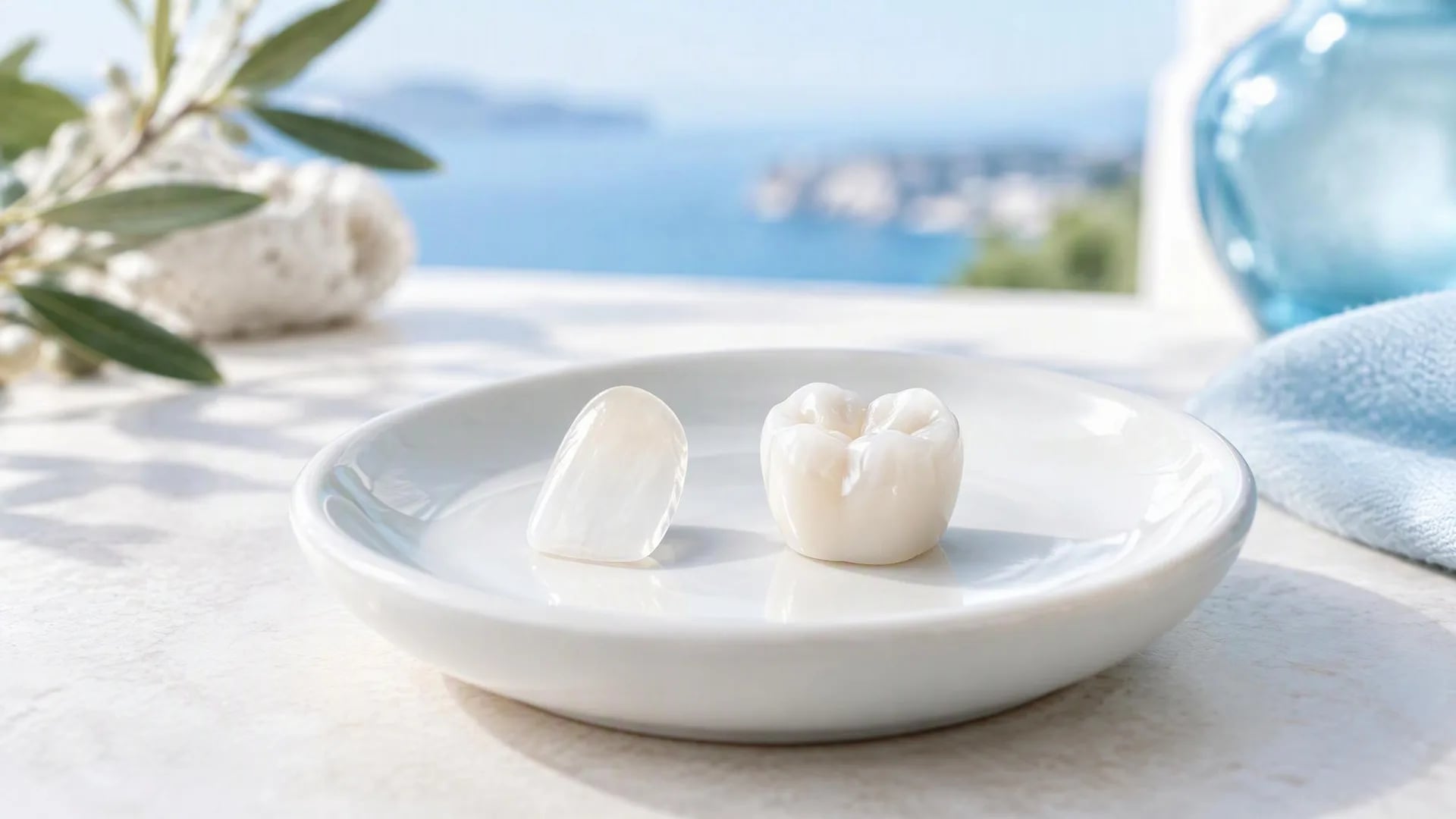
The American Dental Association's patient resource on veneers describes a thin, custom-made shell bonded to the front surface of a tooth, distinct from a crown, which covers the whole tooth. Treatment typically follows a sequence: the dentist prepares the tooth by removing a small amount of enamel, takes an impression or a digital scan, sends the file to a dental laboratory for the veneer to be made, and fits a temporary while you wait. A second visit checks fit, shade and bite before the final veneer is bonded. The ADA is explicit that this process is not reversible once enamel has been removed, and that any dental disease should be treated first, since placing a veneer over an unhealthy tooth can make the underlying problem worse (ADA MouthHealthy guidance on veneers).
For a US patient flying to Turkey, this two-step sequence is the main reason the trip cannot usually be compressed into a long weekend. Ask in advance exactly how many clinical appointments your case needs, how many days apart they will be scheduled, and what happens if the laboratory needs extra time to match shade or contour.
Planning the flight, time zone and length of stay from the USA
Most US departure points do not have a direct flight to Antalya, so the realistic routing is a transatlantic flight into Istanbul followed by a short domestic connection, or a single long-haul leg if your airline schedules a seasonal direct service. Depending on your home airport, total travel time including the connection commonly runs nine to fourteen hours each way. Turkey is seven to ten hours ahead of continental US time zones, so building in a rest day before your first appointment, rather than landing and heading straight into a preparation visit, is a reasonable way to manage jet lag before any dental work.
A realistic minimum stay for porcelain veneers is about five to seven days: time to recover from travel, attend the preparation visit, allow the laboratory to fabricate the veneers, and return for the fit and bite check. If your case also involves whitening, gum contouring or combining veneers with crowns on other teeth, your treatment plan may need extra days, which should be confirmed in writing before you fly rather than assumed.
What the CDC and ADA recommend US patients check before travelling
The CDC's Yellow Book chapter on medical tourism recommends that anyone considering treatment abroad have a discussion with a healthcare professional in the US well before departure, and notes dental care is the most common form of medical tourism among US residents, partly because a significant share of the US population is uninsured or underinsured for dental care. The CDC also flags that facilities and practitioners abroad may not be held to the same accreditation or licensing oversight as in the US, so the guidance recommends checking a provider's qualifications and accreditation status directly rather than relying on marketing claims (CDC Yellow Book: Medical Tourism).
The ADA's own travel page echoes this, specifically recommending that patients considering dental tourism confirm with their insurer and their home dentist that follow-up treatment is covered and arranged before they travel, and that they request copies of records from the overseas provider in a format a US dentist can use (ADA MouthHealthy: dentistry while travelling abroad). In practice, this means asking your Turkish clinic, before you book, for a written treatment plan that states which teeth are being treated, the material being used, and what is included if a veneer needs adjustment after you return home.
Verifying who is actually treating you
The ADA has separately issued a public statement warning about unlicensed "veneer technicians" offering services that bypass a dentist altogether, warning that unsupervised treatment carries risks of infection and nerve damage and that only a licensed dentist should place a veneer (ADA MouthHealthy guidance on veneers). The same logic applies abroad: before travelling, ask for the name and registration details of the dentist who will actually prepare your teeth, not just the clinic's marketing team or a coordinator, and ask how that dentist's licence can be verified. A reputable Turkish dental tourism agency should be able to put this in writing without hesitation. The Academy of General Dentistry's review of dental tourism similarly recommends requesting a provider's résumé and checking which accreditation body recognises the clinic, rather than judging suitability from before-and-after photos alone (Academy of General Dentistry: dental tourism considerations).
Porcelain vs composite: which matters more for a US patient travelling once
| Question | Porcelain veneer | Composite veneer |
|---|---|---|
| Visits typically needed | At least two, with a laboratory step in between | Often fewer, sometimes completed in one visit |
| Durability | Generally more stain- and wear-resistant | Easier to repair, but less stain-resistant over time |
| Fit for a single trip abroad | Requires the trip to be planned around the lab turnaround | May suit a shorter visit, but still needs careful aftercare planning |
| Reversibility | Not reversible once enamel is prepared | Less enamel removal in many cases, but still a permanent bonded change |
This distinction matters specifically for a one-trip US patient: a composite veneer can sometimes be finished and adjusted in a single longer appointment, which changes how many days you actually need to allow, while porcelain depends on laboratory timing that a clinic cannot always compress. Ask which material is being proposed for your case and why, not only what it will look like.
Insurance, records and aftercare once you are home
Veneers are usually classed as cosmetic dentistry in the US, which means many standard dental insurance plans do not cover them unless a specific functional justification applies, and travel or supplemental medical insurance frequently excludes elective cosmetic procedures entirely. Confirm this with your own insurer before you travel, rather than after. The CDC's guidance also recommends asking, in advance, whether complications arising after a procedure abroad are covered by any insurance you hold, and whether the clinic providing care has a defined policy for addressing problems that surface after you have already left the country.
Before you fly home, request your full records: the material and shade used, any imaging taken, and written aftercare instructions, ideally in English. If you do not already have a regular dentist in the US, consider arranging one before you travel so that your case can be picked up quickly if something needs attention, such as a bite adjustment or a veneer margin that needs reviewing.
FAQ
Can a US patient get porcelain veneers done in a single Turkey trip?
Usually yes, but plan for at least two clinical visits a few days apart rather than one appointment, since the veneer must be made in a laboratory between the preparation and fitting stages.
Will my US dental insurance cover veneers done abroad?
Often not, since veneers are generally considered cosmetic. Confirm directly with your insurer before travelling, and ask the Turkish clinic what, if anything, is covered if a veneer needs adjustment after you return.
Do I need a visa to fly from the US to Turkey for dental treatment?
Entry requirements change, so check current Turkish e-visa or visa-exemption rules for US passport holders on an official government source before booking flights.
What should I ask before choosing a clinic in Antalya?
Ask for the treating dentist's name and licence details, the material being proposed, a written treatment plan for each tooth, and what happens if something needs correcting after you are back in the US.
Is it safe to fly soon after a veneer fitting?
Veneer placement is not major surgery, but general post-travel guidance still recommends discussing your specific recovery timeline with the treating dentist, particularly if your plan also includes extractions, implants or gum treatment alongside the veneers.
Health Talia is a dental tourism agency based in Antalya that helps US patients plan veneer treatment with partner dental teams, starting with a free consultation and an x-ray review before any written quote is issued. If you would like to talk through your case, including how many visits your plan would realistically need, message Health Talia on WhatsApp at +90 536 500 0744 or request a free consultation. You can also read more about porcelain veneers as a treatment option, compare veneers against crowns, or review our wider guide to planning dental treatment in Turkey from the USA.
Sources:
Planning veneers or a Hollywood Smile?
Share a few smile photos and a recent x-ray. A dentist reviews them and explains realistic options for your smile, free.
Reply within 24 hours on WhatsApp
Related articles

8 min readIllustrative
Travel Insurance for Dental Treatment Abroad: What It Covers and What It Doesn't
What UK, Irish, US, Canadian and Australian patients should know about travel insurance before dental treatment in Turkey.
9 min readIllustrative
Dental Treatment Abroad: What to Do If Something Goes Wrong
What UK, Irish, US, Canadian and Australian dental bodies advise if a complication appears after dental treatment abroad, and how to reduce the risk.