
Veneers in Turkey for UK Patients: What to Plan Before You Fly
A practical guide for UK patients: how many visits veneers in Turkey need, what GDC and BDA advise, and what to arrange before you travel.
What you need to know
A practical guide for UK patients: how many visits veneers in Turkey need, what GDC and BDA advise, and what to arrange before you travel.
A practical guide for UK patients: how many visits veneers in Turkey need, what GDC and BDA advise, and what to arrange before you travel.
Porcelain veneers in Turkey typically need two clinic appointments on one trip to Antalya — a preparation and shade-matching visit, then a fitting visit several days later once the veneers are made — though more complex cases involving several teeth or a full smile redesign sometimes need a second trip. Before you book, it is worth knowing that veneer tooth preparation is largely irreversible, that the General Dental Council (GDC) has specific guidance for patients considering treatment abroad, and that you should agree a plan with your own dentist for records-sharing and aftercare before you fly. This guide sets out the realistic timeline, what UK regulators recommend, and the questions worth asking before treatment starts.
What "veneers in Turkey" actually involves
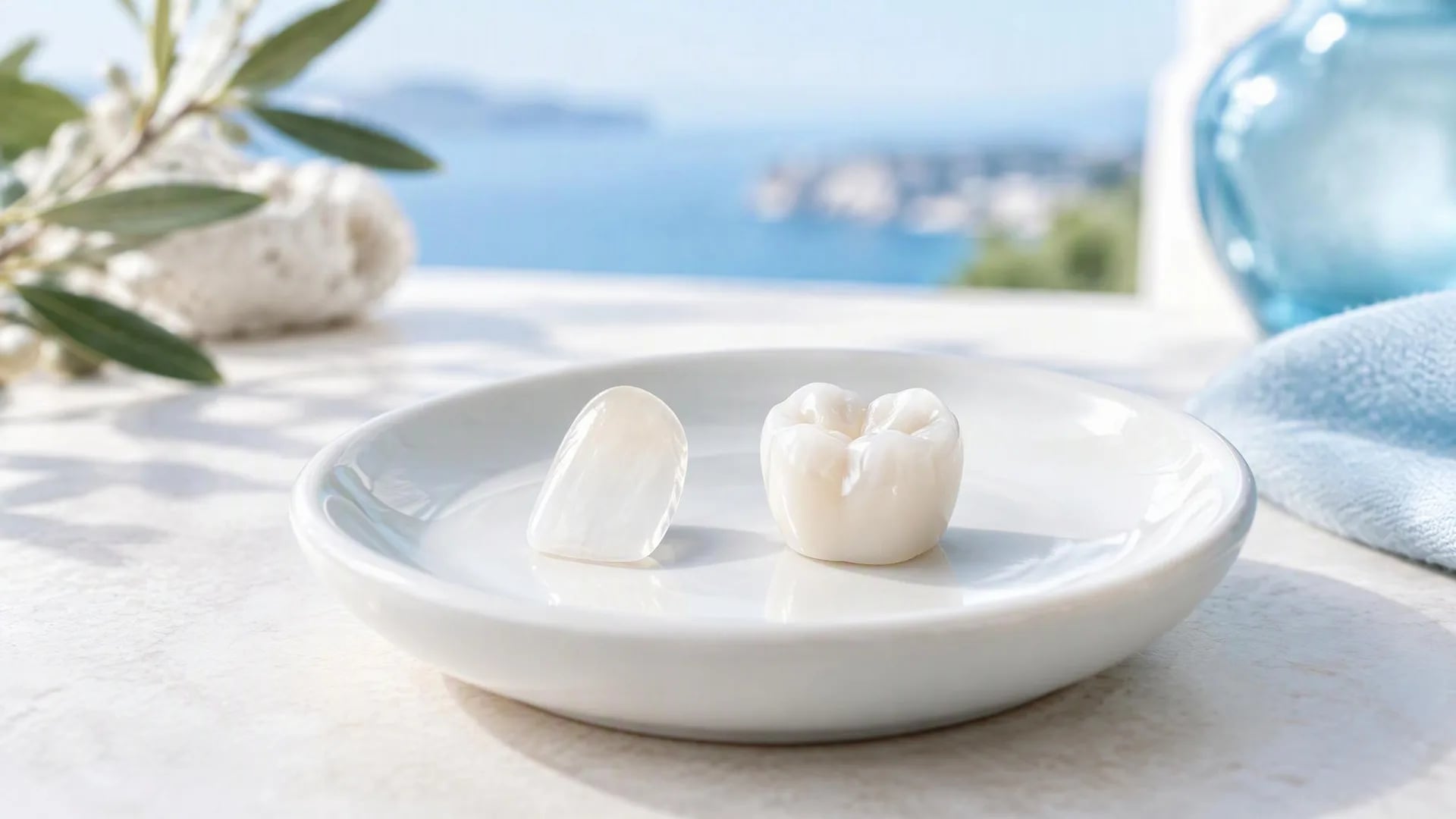
A veneer is a thin shell, usually porcelain or a composite resin, bonded over the front surface of a tooth to change its shape, colour or alignment. The NHS describes the process as similar to fitting a false fingernail: a thin layer of tooth-coloured material is fixed over the front of the natural tooth. For traditional porcelain veneers, this normally means a dentist removes a small amount of enamel from the front of the tooth so the veneer sits flush and looks natural rather than bulky.
That enamel removal is the detail patients often underestimate. Cleveland Clinic's patient guidance on dental veneers is clear that traditional veneer preparation is irreversible — once enamel is removed, the tooth will always need some form of covering restoration. This is a reason to discuss alternatives, including less-invasive composite veneers or orthodontic options, before committing to any irreversible step, in the UK or in Turkey.
Not every smile concern needs a veneer. A dentist should examine your bite, gum health, existing fillings or decay and the surrounding teeth before recommending veneers over alternatives such as whitening, bonding or orthodontics.
How many visits, and how long should you plan to stay in Antalya?
Neither the GDC nor the NHS publishes a fixed appointment count for veneers, because the right number depends on your case. A straightforward case — a small number of teeth, no underlying gum or bite problems — is often planned as one trip with two appointments several days apart, giving the dental laboratory time to make the veneers after your teeth are prepared and scanned. More teeth, a full smile redesign, or gum treatment and fillings beforehand can extend this into a longer stay or a second trip for review and adjustment.
| Stage | What usually happens | Question to ask your clinic |
|---|---|---|
| Assessment | Examination, photographs, sometimes a digital smile design mock-up | What alternatives to veneers were considered, and why? |
| Preparation | Minimal enamel removal and an impression or digital scan of the prepared teeth | Exactly how much tooth structure will be removed, and is it reversible? |
| Temporary veneers | Temporary covers protect the prepared teeth while the final veneers are made | How long will I wear temporaries, and what should they feel like? |
| Fitting | Final veneers are checked for fit, bite and shade, then bonded | What happens if the fit or shade needs adjustment after bonding? |
| Review | A follow-up check, in person or remotely, after you are home | Who reviews my bite and gum response once I am back in the UK? |
Ask your clinic to confirm, in writing, the exact number of visits your specific case needs and what happens if your teeth need more preparation time than expected once treatment starts. A written plan that names the stages, rather than a single headline day count, is a better basis for booking flights and accommodation.
What UK dental regulators say about having veneers abroad
The GDC's patient guidance on going abroad for dental treatment is direct about the limits of oversight: it states that it "can't guarantee another organisation like us exists in other countries, or even that the standards will be the same as they are here," and recommends patients ask in advance what happens if they are unhappy with the result, and who would pay for extra flights, accommodation or remedial work. It also recommends speaking to your own dentist before travelling.
The British Dental Association has made a similar point publicly, noting that patients "need to provide informed consent for any treatment they have and be wary of a hard-sell, as the reality is rarely as simple as it appears on Instagram," and advising patients to get advice in advance on what to do if problems occur after they return home. The Oral Health Foundation's guidance on dental tourism frames UK regulatory standards as a high bar and sets out a checklist of questions patients should ask any overseas provider before booking.
None of this means treatment abroad is automatically unsafe. A peer-reviewed review of UK media reporting on contemporary dental tourism notes that most patients who travel for treatment do not report problems — but it also references a BDA member survey in which a notable share of UK dentists reported seeing complications linked to treatment received abroad. Outcomes vary by clinic, case and preparation, which is why the questions in the table above matter more than any single review or photo.
What to arrange with your dentist back home before you fly
Continuity of care is the practical issue that UK guidance keeps returning to. Before you travel for veneers in Antalya, it is worth having a short conversation with your existing dentist, even if they are not involved in the treatment itself, covering a few points.
- Ask whether your dental records, x-rays and any existing restoration details can be shared with the treating clinic in advance, so your Antalya dentist is working from a complete picture rather than a single photograph.
- Confirm who you would see for a routine check-up or a problem such as sensitivity, a chip or a loose veneer once you are back in the UK, and whether your current dentist is willing to review treatment carried out elsewhere.
- Check your travel insurance for dental exclusions in writing, and confirm with the clinic what aftercare is covered if adjustments are needed after you return — the GOV.UK travel advice for Turkey is worth reading before you book flights.
- Ask for copies of your treatment records, veneer material and shade details, and any warranty terms in writing before you leave Antalya, not after.
At Health Talia, this is the stage where our team coordinates between you and the treating Antalya clinic: sending your initial photographs and history for a clinical review, confirming the proposed stages in writing, and arranging a free treatment plan before you commit to travel dates.
Honest trade-offs: why "Turkey teeth" became a cautionary phrase
UK media coverage in recent years has used the phrase "Turkey teeth" to describe cases where veneers or crowns were fitted after aggressive, unnecessary removal of healthy enamel, sometimes across a full arch of teeth that did not need it. This is not a problem unique to Turkey, and it is not what a well-run veneer case looks like — but it is a real pattern worth understanding before you book anywhere, in Turkey or elsewhere.
The underlying clinical issue is informed consent: a dentist should explain exactly which teeth need preparation, how much enamel will be removed, and why less invasive options were or were not suitable for your case, before any irreversible step is taken. If a clinic proposes veneers on teeth that are otherwise healthy without a clear clinical explanation, or cannot describe what happens if you are unhappy with the shade or shape after bonding, that is a reason to pause and ask more questions rather than proceed on trust alone.
Honest risk discussion also covers well-planned cases: veneers can occasionally debond, chip or need replacement over time, and the tooth remains more sensitive to temperature once enamel is reduced. No responsible clinic can promise a permanent or risk-free result, and a plan that skips maintenance or future replacement is incomplete.
FAQ
Is veneer preparation really irreversible?
For traditional porcelain veneers, yes — once enamel is removed from the front of a tooth, that tooth will always need some form of covering restoration. Composite veneers or bonding, which add material rather than remove it, are a less invasive alternative worth discussing if you are unsure.
How many trips to Antalya do veneers usually need?
Many straightforward cases are planned as a single trip with two appointments several days apart, for preparation and then fitting. More complex cases, or those needing gum treatment or extractions first, may need a longer stay or a second trip. Ask for your specific plan in writing rather than relying on a general estimate.
What should I check with my own dentist before I go?
Ask whether they can share your records and x-rays with the treating clinic, confirm whether they would be willing to review or maintain treatment carried out abroad once you are home, and check your travel insurance for any dental exclusions in writing.
Are veneers in Turkey regulated to the same standard as the UK?
The GDC has stated it cannot guarantee that standards in other countries match those enforced in the UK. This makes it important to verify the treating clinic and clinician directly, ask for registration and facility details, and get a written treatment plan before committing, wherever you choose to be treated.
What happens if I am unhappy with the result after I am home?
Agree this in writing before you travel: ask the clinic what their process is for reviewing concerns remotely, whether remedial work is covered, and what your own dentist back home is willing to assess if you need an in-person opinion.
If you are weighing up veneers in Turkey as a UK patient, the safest starting point is the one UK regulators recommend: speak to your own dentist first, then ask any treating clinic for a written, staged plan rather than a single price or photo. Health Talia's team can review your photographs and dental history and coordinate a free treatment plan with our partner clinic in Antalya before you book travel, or message us directly on WhatsApp at +90 536 500 0744 with questions about timing or preparation. For more on vetting a clinic and planning the trip, see our guides on dental tourism safety for UK patients and the 25-question checklist for dental treatment abroad.
Sources
- NHS — Dental treatments: bridges, crowns, veneers and implants
- General Dental Council — Going abroad for dental treatment
- British Dental Association — Dental tourism: patients need to know the risks
- Oral Health Foundation — Dental tourism explained
- PMC — Contemporary dental tourism: a review of reporting in the UK news media
- Cleveland Clinic — Dental veneers
- GOV.UK — Foreign travel advice: Turkey
Planning veneers or a Hollywood Smile?
Share a few smile photos and a recent x-ray. A dentist reviews them and explains realistic options for your smile, free.
Reply within 24 hours on WhatsApp
Related articles

7 min readIllustrative
How to Read Dental Clinic Reviews Before Booking Treatment in Antalya
Star ratings and Trustpilot reviews are useful research, but they can't verify a dentist's qualifications. Here's what to check first.

9 min readIllustrative
Antalya vs Istanbul for Dental Treatment: How to Choose
Antalya or Istanbul for dental treatment? Compare travel time, clinic scale, holiday value and the verification steps that matter in either city.