
Implant-Retained Dentures in Antalya: What to Expect
How implant-retained dentures (overdentures) work in Antalya: candidacy, attachment types, the treatment timeline and aftercare essentials.
What you need to know
How implant-retained dentures (overdentures) work in Antalya: candidacy, attachment types, the treatment timeline and aftercare essentials.
How implant-retained dentures (overdentures) work in Antalya: candidacy, attachment types, the treatment timeline and aftercare essentials.
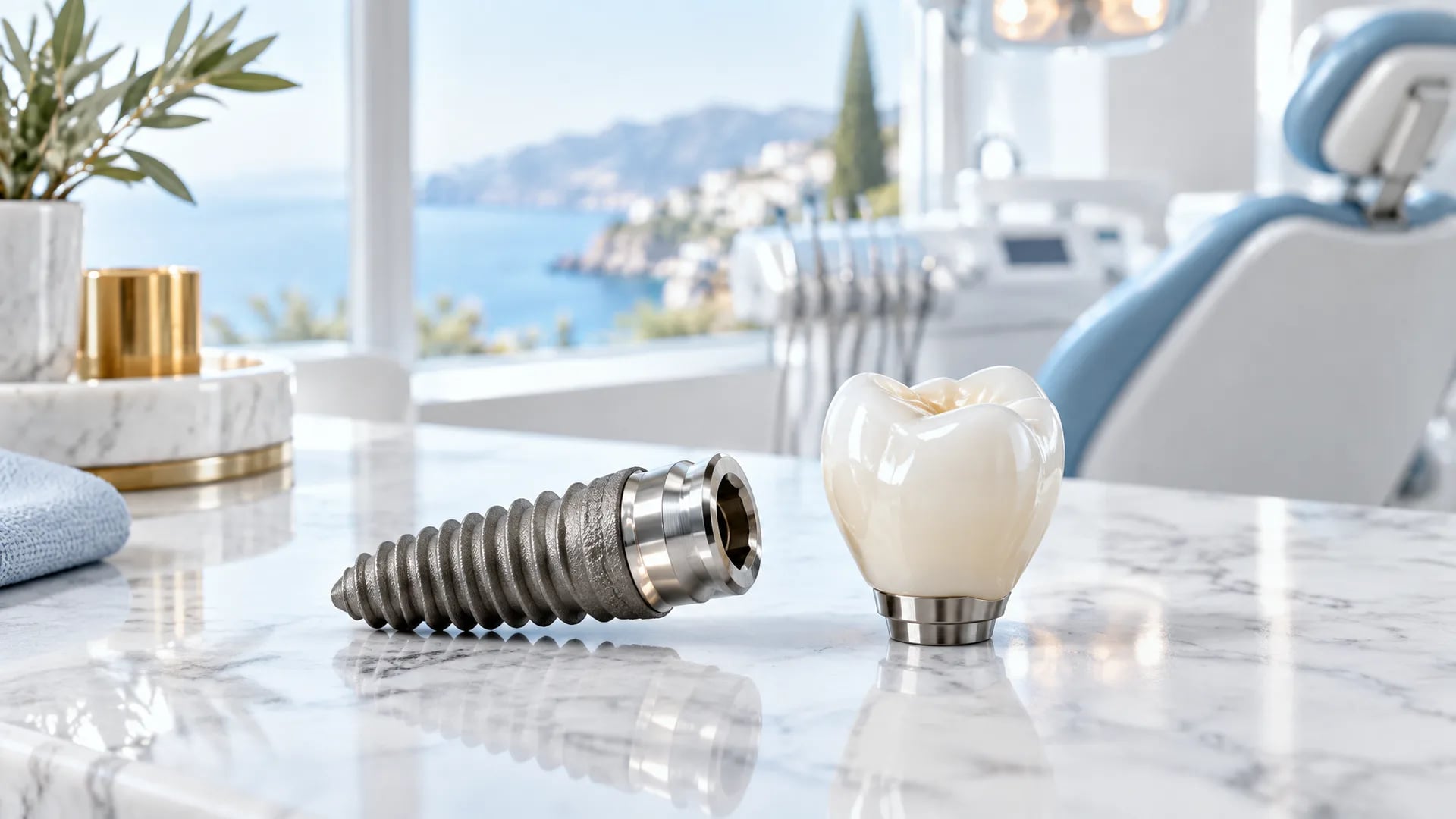
An implant-retained denture is a removable full or partial denture that clips onto two or more dental implants instead of resting on the gum alone, giving it far more stability than a conventional plate. It suits people who find ordinary dentures loose, painful, or hard to eat with, and it is usually less invasive and less costly in implant numbers than a fixed full-arch bridge. In Antalya, the treatment typically combines an initial consultation and implant placement visit with a second trip around three to six months later for the denture fitting, once the implants have integrated with the jawbone.
What Is an Implant-Retained Denture?
An implant-retained (or "implant-overdenture") is a denture base that snaps onto implant attachments rather than relying purely on suction and the shape of the gum ridge. The denture can still be taken out for cleaning and at night, which is the main difference from a fixed, implant-supported bridge that stays in the mouth permanently.
Three attachment systems are used most often:
- Locator or ball attachments — small studs on each implant that the denture clips onto individually. They are simpler to adjust and replace, and are a common first choice for a lower-jaw overdenture.
- Bar attachments — a thin metal bar splints several implants together, and the denture clips onto the whole bar. Research comparing attachment systems has found that bar designs tend to offer the strongest retention and the best marginal bone preservation around the implants, though they cost more in laboratory work and are more involved to clean underneath.
- Magnetic attachments — less common now, generally reserved for patients with limited manual dexterity or very shallow bone.
The UK's National Health Service describes implant-retained options as a way to make a denture "much more stable and retentive" than one resting on the gum alone, which matches what most patients notice first: far less movement when eating or speaking.
Who Is a Good Candidate?
Implant-retained dentures are most often recommended for patients who have lost all or most of their natural teeth in one or both jaws and who have struggled with a conventional denture — typically because the lower jaw has too little ridge left for suction to hold a plate in place. A thorough case review, usually from a dental CT scan and x-rays, checks three things before treatment is agreed: bone volume and density at the proposed implant sites, gum health, and general medical factors such as diabetes control and smoking, since smoking measurably raises the risk of implant failure.
A landmark piece of evidence in this field is the McGill Consensus Statement, where an international panel of prosthodontists and researchers concluded that a two-implant overdenture — not a conventional denture — should be considered the minimum standard of care for a patient with a fully edentulous lower jaw, based on the depth of clinical evidence for patient satisfaction and chewing function. That is a useful benchmark when comparing treatment plans: two implants is the floor for the lower jaw, with some patients needing more depending on bite forces and bone quality, and the upper jaw usually needs four or more because the bone there is softer.
Patients who smoke heavily, have uncontrolled gum disease, or have very limited bone (without a bone graft or sinus lift first) may need additional preparatory treatment, or may be better suited to a different restoration altogether. This is exactly why Health Talia's process starts with a free review of your x-rays before any travel plan is confirmed.
The Treatment Journey: What to Expect in Antalya
Most patients travelling from the UK or Europe for implant-retained dentures need two visits, spaced around three to six months apart:
- Visit 1 — assessment and surgery. A clinical exam, scans, and a treatment plan are confirmed, followed by implant placement under local anaesthetic. A temporary denture is usually fitted so you are not without teeth while healing.
- Healing period at home. Osseointegration — the implant fusing with the jawbone — generally takes around two to six months, often shorter in the lower jaw and longer in the upper jaw, where bone is less dense. This stage cannot be rushed safely, whichever country the treatment is done in.
- Visit 2 — attachments and final denture. Once integration is confirmed, the attachment components (locators, ball housings, or a bar) are fitted and the final overdenture is made, tried in, and adjusted for bite and fit.
Our team coordinates free VIP airport transfer and accommodation support around both visits, and every plan begins with a free consultation and x-ray review so you receive a written treatment plan before deciding anything — there is no obligation and no guesswork about what your case needs.
Implant-Retained vs Implant-Supported (Fixed) Dentures
Patients researching full-arch options often also come across All-on-4 and fixed implant bridges. The two approaches solve the same problem — tooth loss across a full arch — in different ways, and the right one depends on bone volume, budget priorities, and how a patient wants to care for the restoration day to day.
| Implant-Retained Denture (Overdenture) | Implant-Supported Fixed Bridge (e.g. All-on-4) | |
|---|---|---|
| Removable? | Yes — taken out nightly and after meals for cleaning | No — fixed in the mouth, cleaned like natural teeth |
| Typical implants per arch | 2 or more (lower jaw), 4 or more (upper jaw) | 4 or more, splinted together |
| Feel when eating/speaking | Much more stable than a conventional denture, slight movement still possible | Closest to natural teeth in stability |
| Maintenance | Attachment components (locator inserts, bar clips) wear and need periodic replacement | Professional cleaning visits; no clip replacement |
| Good option when | Bone volume is limited, fewer implants are preferred, or a removable option is wanted for easier cleaning | Sufficient bone is available and a fixed, non-removable result is the priority |
Neither option is universally "better" — a dentist reviewing your scans and bite can usually tell within one assessment which route gives you the more predictable, longer-lasting result.
Caring for an Implant-Retained Denture
Long-term success depends on daily habits as much as the surgery itself. The American Dental Association recommends removing the overdenture every night, brushing it with a soft brush and a non-abrasive cleanser, cleaning the implant attachments in the mouth with a soft brush or interdental brush, and soaking the denture in a cleaning solution at least weekly to reduce bacterial build-up.
A few points worth planning for before you travel:
- Attachment inserts (the small nylon or plastic parts inside locator housings) wear down with use and typically need replacing roughly once a year, a routine adjustment rather than a complication.
- Review visits with a dentist every three to six months are important to check the implants, the gum tissue, and the fit of the denture base, which can change slightly as the gums settle.
- Smoking and poor oral hygiene remain the two biggest controllable risk factors for implant problems after placement, just as they are before it.
We ask every patient to keep in touch after treatment and share this routine clearly as part of the written plan, so aftercare at home is never a surprise.
FAQ
How many implants do I need for an implant-retained denture?
For a lower-jaw overdenture, two implants is widely regarded as the minimum standard of care, following the McGill Consensus Statement, though some patients benefit from more. An upper-jaw overdenture usually needs four or more implants because the bone there is softer and bite forces are distributed differently.
Is an implant-retained denture the same as All-on-4?
No. An implant-retained denture is removable and clips onto implants; All-on-4 is a fixed bridge that stays in the mouth permanently and is only removed by a dentist. Both use dental implants, but they are different prosthetic designs suited to different cases.
How long does the whole process take?
Expect two visits to Antalya spaced roughly three to six months apart, with the gap needed for the implants to integrate with the jawbone — this healing time is a biological process and is the same wherever in the world the implants are placed.
Can I have implant-retained dentures if I've worn conventional dentures for years?
Often, yes. Long-term denture wearers frequently have reduced jawbone volume, which is one of the most common reasons people move to an implant-retained denture in the first place. A scan will confirm whether your bone is sufficient as it stands or whether a bone graft or sinus lift is advisable first.
Will my denture ever feel completely fixed, like natural teeth?
No treatment can promise a guaranteed, permanent-feeling result, and an implant-retained denture is still a removable prosthesis by design — it will feel significantly more stable than a conventional denture, but patients who want a sensation closest to natural, fixed teeth are usually better matched to a fixed implant bridge.
Next Step: A Free, No-Obligation Review
If you are weighing up implant-retained dentures against a fixed alternative, the clearest next step is a free consultation and x-ray review, so a dentist can tell you — in writing, before you travel — how many implants your case needs and which attachment system fits your bite and budget priorities. You can also message our team directly on WhatsApp at +90 536 500 0744 to ask questions or send your scans for an initial read. Our full range of denture and implant options is reviewed case by case, with no pressure and no price guessing before a dentist has actually seen your x-rays.
Sources
Thinking about dental implants?
Send your x-ray and a dentist at a licensed partner clinic in Antalya reviews it and prepares a written implant plan, free and with no obligation.
Reply within 24 hours on WhatsApp
Related articles
9 min readIllustrative
Root Canal Treatment in Antalya: What to Expect as a UK Patient
What root canal treatment in Antalya involves, how many appointments to expect, and how to check a clinic's standards before you travel.
7 min readIllustrative
Night Guards in Antalya: Do You Need One With Your Dental Treatment?
What a night guard does, what research shows about bruxism and implants, and how it fits your treatment plan in Antalya.