
E.max Crowns vs Zirconia Crowns: Which Is Right for You?
A 2026 study of 64 trials compares E.max and zirconia crown survival, strength and looks — and which teeth each material really suits.

O que precisa de saber
A 2026 study of 64 trials compares E.max and zirconia crown survival, strength and looks — and which teeth each material really suits.
A 2026 study of 64 trials compares E.max and zirconia crown survival, strength and looks — and which teeth each material really suits.
Quick answer: E.max crowns (lithium disilicate) are a translucent glass-ceramic, best known for a natural look on front teeth. Zirconia crowns are stronger and more opaque, often chosen for back teeth and heavy bites. A 2026 meta-analysis of 64 studies found both monolithic versions achieve five-year survival above 96% — so the decision is usually made tooth by tooth.
In this guide
- The difference between E.max and zirconia
- What are E.max crowns?
- What are zirconia crowns?
- Side-by-side comparison
- What the latest research says
- Which material might suit you
- Checks before crowns abroad
- Who should not have crowns
- What getting crowns involves
- Risks and aftercare
- How Health Talia helps
- FAQ
- Conclusion
- References
If a dentist has suggested a crown, you may be asked to choose between “E.max” and “zirconia”. Both are metal-free ceramics, both can look natural, and both are backed by solid research — but each suits particular teeth, which is why dentists usually choose tooth by tooth rather than for a whole mouth.
What is the difference between E.max and zirconia crowns?
A crown is a cap covering the whole visible part of a tooth to restore shape, strength and appearance. The Oral Health Foundation notes crowns may be needed for teeth that are damaged, weakened or discoloured; the American Dental Association lists protecting a weak tooth or covering a large filling as typical reasons.
The difference is the ceramic itself:
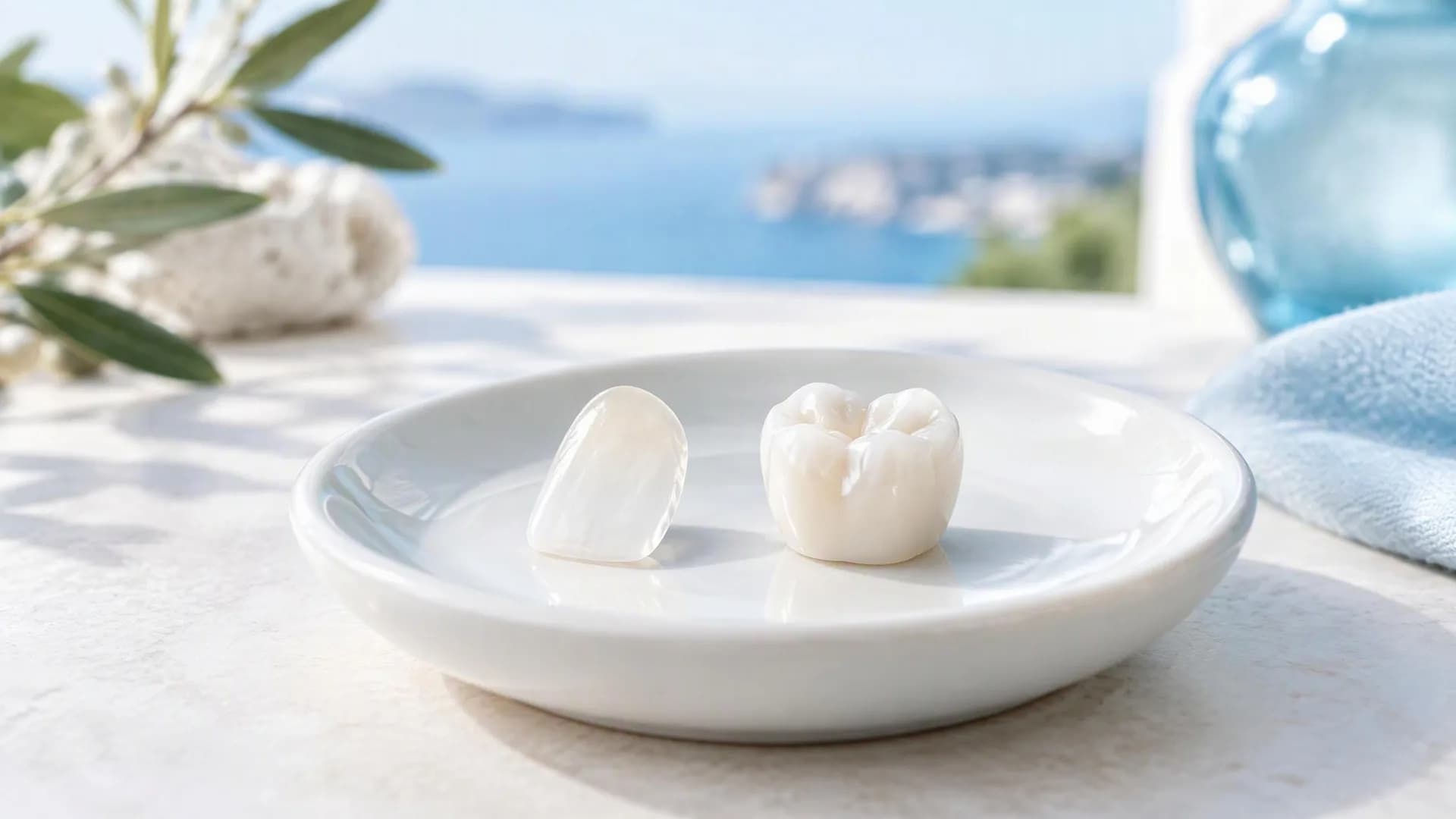
- E.max (lithium disilicate): a glass-ceramic letting light pass through much like enamel. “E.max” is a trade name now used as shorthand for lithium disilicate generally.
- Zirconia (zirconium dioxide): a very strong, tough ceramic. Traditional zirconia is more opaque; newer high-translucency types look more natural but somewhat less strong.
In short: lithium disilicate leans towards appearance; zirconia leans towards strength.
What are E.max crowns?
Lithium disilicate crowns are usually milled or pressed as one piece (monolithic), sometimes with a thin porcelain layer added at the front for extra character.
- Translucency: light passes into the crown rather than bouncing off it, helping it blend with neighbouring teeth.
- Bonding: usually bonded with resin cement, adding to strength in the mouth.
- Versatility: the same material is widely used for porcelain veneers and onlays, so front teeth can be matched closely.
The trade-off: lithium disilicate is less fracture-resistant than zirconia, so dentists are more cautious with it for bridges, heavy bites, or a tooth with a dark core to mask.
What are zirconia crowns?
Zirconia crowns come in two main designs:
- Monolithic zirconia: milled from a single block, no porcelain layer. The strongest option, widely used on back teeth and in people who grind.
- Layered zirconia: a zirconia core with porcelain on top for a more lifelike look, though the porcelain is the weak point if it chips.
Zirconia is also good at masking a dark tooth or metal post, and is widely used for bridges and implant crowns. More on our zirconium crowns page.
How do E.max and zirconia compare side by side?
| Question | E.max (lithium disilicate) | Zirconia |
|---|---|---|
| Material type | Glass-ceramic | Polycrystalline ceramic (zirconium dioxide) |
| Appearance | High translucency; blends well with front teeth | More opaque; high-translucency/layered types look more natural |
| Raw material strength | Good | Very high, especially monolithic zirconia |
| Typical use | Front teeth, veneers, onlays, some back teeth | Back teeth, bridges, implant crowns, grinders |
| Masking a dark tooth or post | Limited | Good |
| 5-year survival, monolithic design* | 98.5% | 96.8% |
| Typical stay in Antalya | About four to six days | About four to six days |
*Pooled estimates from the meta-analysis below; outcomes vary with tooth, bite and technique.
What does the latest research say about how they perform?
A 2026 systematic review and meta-analysis in the International Journal of Prosthodontics (Pjetursson et al.) pooled 64 prospective studies covering 3,509 metal-ceramic and 8,051 all-ceramic single crowns. Estimated five-year survival: 98.5% monolithic lithium disilicate, 97.3% veneered zirconia, 97.1% metal-ceramic, 96.8% monolithic zirconia, and 95.7% veneered leucite/lithium disilicate; older feldspathic ceramic trailed at 90.4%.
The clearest finding was about design, not just material: monolithic crowns of both materials had significantly fewer ceramic fractures and chips over five years — roughly 0.3–1.7% — than layered or veneered versions, up to 7.9% for veneered zirconia and 27.5% for older zirconia-silicate crowns. How a crown is built matters as much as which ceramic it is made from. One caveat: higher marginal discolouration appeared for monolithic zirconia in a single small study and needs confirming in larger samples.
Which material might suit your teeth?
The treating dentist recommends a material after examining your teeth, bite and x-rays:
- Lithium disilicate for front teeth where a natural, translucent look matters most, or to match existing veneers.
- Zirconia for back teeth under heavy load, bridges, implant crowns, grinders, or a dark tooth or post to mask.
- A combination is common in a smile makeover: lithium disilicate at the front, zirconia further back, as in many Hollywood Smile plans.
Be cautious of any claim that one material suits everyone.
What should you check before having crowns made abroad?
Crown and implant work are among the problems UK dental bodies most often hear about after treatment overseas, so clinic choice matters as much as material choice. The General Dental Council suggests checking, before you travel: whether the destination has a dental regulator, how to raise a complaint, and what aftercare is available once home — the same applies from Ireland, the US, Canada or Australia. In practice: get a written plan naming the material per tooth, keep your x-rays, and agree in writing how follow-up queries are handled.
Who should not have crowns at all?
A crown removes more tooth structure than a filling or veneer. Crowns may not be right for:
- healthy teeth that only need a colour or shape change — whitening, bonding or veneers are usually more conservative;
- teeth with untreated decay or infection, which must be treated first;
- people with active, uncontrolled gum disease;
- teeth with too little remaining structure, where an implant may be more predictable;
- heavy grinders without a plan to protect the restoration, such as a night guard.
What does getting crowns involve?
- Assessment. The dentist reviews your x-ray, photos and examination, and discusses alternatives such as onlays or veneers.
- Preparation. Under local anaesthetic the tooth is shaped; a digital scan or impression is taken and a temporary crown fitted.
- Laboratory work. The crown is designed and milled or pressed, then stained and glazed to match neighbouring teeth.
- Try-in and fitting. Fit, shade and bite are checked before the crown is bonded or cemented, with final adjustments made.
Most crown treatment needs one trip of four to six days. If root canal treatment is needed first, allow extra days, and keep a spare day before your flight for bite adjustments.
What are the risks, and how do you look after crowns?
- Sensitivity or nerve inflammation after preparation, occasionally needing root canal treatment — reduced by careful, cooled preparation.
- Fracture or chipping — more likely with layered than monolithic designs, as above; a night guard for grinders lowers the risk further.
- Loss of retention — accurate preparation and the right cementation technique reduce the chance of a crown coming loose.
- Decay or gum inflammation at the edge — prevented by accurate margins, interdental cleaning, and regular check-ups.
- Wear of opposing teeth — minimised by a well-polished or glazed surface.
Once anaesthetic wears off you can usually eat normally, though mild sensitivity for a few days is common. If your bite feels high, have it adjusted before you fly. The NHS notes a night guard protects teeth from grinding-related wear, though evidence it stops the grinding itself is limited. At home, brush twice daily, clean between teeth, and attend regular check-ups.
How does Health Talia coordinate treatment in Antalya?
Health Talia is a health tourism coordinator working with partner clinics in Antalya. The treating dentist makes all clinical decisions, including which material suits each tooth. Our role:
- Free x-ray review: a dentist gives a provisional view before the in-person examination.
- Written plan: a treatment plan before booking travel, naming the proposed material per tooth.
- Hotel and transfers arranged in Antalya.
- WhatsApp support before, during and after your trip.
Frequently asked questions
Is E.max stronger than zirconia?
As a raw material, zirconia is tougher. But the 2026 meta-analysis found monolithic lithium disilicate had a slightly higher pooled five-year survival (98.5%) than monolithic zirconia (96.8%) — survival depends on fit and bonding as much as raw strength. Zirconia is still generally preferred for bridges or very heavy bites.
Which looks more natural?
Lithium disilicate is usually more translucent and often chosen for front teeth. Modern high-translucency zirconia can also look natural; the dentist's and technician's skill matters as much as the material.
What is the difference between veneers and crowns?
A veneer covers only the front surface of a tooth and is mainly cosmetic; a crown covers the entire tooth and restores strength as well as appearance. The American Dental Association notes crowns are reserved for more damaged teeth and need more of the tooth reduced. See our veneers page.
What is a night guard, and do I need one?
A night guard (occlusal splint) is worn during sleep to protect crowns and natural teeth from grinding-related wear. The NHS recommends one for people who grind, especially after crown or veneer work; see our night guard page.
Can E.max crowns be used on back teeth?
Often, yes, depending on your bite and whether you grind. Where forces are very high, or for bridges, a dentist may recommend zirconia instead.
How long do E.max and zirconia crowns last?
98.5% and 96.8% five-year survival respectively for monolithic designs, per the 2026 meta-analysis — comparable to metal-ceramic crowns (97.1%). There is no fixed lifespan; grinding, gum health and cleaning all matter.
Conclusion
E.max (lithium disilicate) and zirconia are both well-established, metal-free crown materials. A 2026 meta-analysis of 64 studies found monolithic versions of both achieve five-year survival above 96%, with far fewer fractures than layered designs. Lithium disilicate is generally favoured for translucency on front teeth; zirconia for strength on back teeth, bridges and grinders. The right choice is made tooth by tooth — and, if planning treatment abroad, after checking the clinic's written plan and aftercare arrangements.
If you would like a dentist's view, message us on WhatsApp or request a free treatment plan. You can also read about zirconium crowns, veneers and the Hollywood Smile.
This guide is for general information and does not replace a dental consultation.
References
- A Systematic Review and Meta-analysis Evaluating the Survival, Failure, and Complication Rates of Metal-Ceramic, Veneered, and Monolithic All-Ceramic Tooth-Supported Single Crowns — Part 1 — Pjetursson BE et al. International Journal of Prosthodontics, 2026;39:308–324
- Crowns — Oral Health Foundation
- Crowns — American Dental Association (MouthHealthy)
- Veneers — American Dental Association (MouthHealthy)
- Teeth grinding (bruxism) — Treatment — NHS
- Going abroad for dental treatment — General Dental Council
Wondering whether you need crowns?
Send photos or an x-ray and a dentist explains whether crowns, fillings or another option fits your teeth, in a free written plan.
Reply within 24 hours on WhatsApp
Artigos relacionados
9 min de leituraIlustrativa
Veneers in Turkey for UK Patients: What to Plan Before You Fly
A practical guide for UK patients: how many visits veneers in Turkey need, what GDC and BDA advise, and what to arrange before you travel.

7 min de leituraIlustrativa
How to Read Dental Clinic Reviews Before Booking Treatment in Antalya
Star ratings and Trustpilot reviews are useful research, but they can't verify a dentist's qualifications. Here's what to check first.